By Anthony T. Fiscella
14th August 2026
People say, oh, just ask for permission, as if they’ll respond to you. They don’t. I learned that the only way they will respond to you is if you have a highly paid lawyer.
Nina Paley, (quoted in Benson 2018).
Just do it, don’t ask for permission!
Ian MacKaye of Minor Threat (quoted in Kuhn’s Sober Living for the Revolution, 2010, p. 24).
This article details how a one-time anarcho-punk from the band Vegan Reich threatened to sue publishers a few years ago if they published my article. The publishers chickened out. So I self-published. The case speaks to larger issues about copyrights and fair use in a perilous time for academia.
I presented my first draft for an article about the history of “Total Liberation” at a punk academic conference in 2019. After that, I went through the usual processes of blind peer review. Then I further adjusted the article in accordance to input from the editors. It seemed slated to appear in 2024 in the Journal of Religion and Popular Culture with the title “From MOVE to Hardline: A Punk Perspective on the History of Total Liberation” (see link below: Fiscella 2026). The University of Toronto Press, who publishes the journal, initially agreed to publish the article and images without written permissions. Then they changed editors. And their minds. Suddenly, I had a whole new set of hoops to jump through: acquiring written permission from each person whom I interviewed as well as locating and acquiring permission from each artwork creator. Difficult but manageable. Except for a big hitch: one person claimed that the article contained “defamatory statements” about him. He refused to grant permission to publish his artwork and threatened litigation if they did.
Part of the article demonstrated a visual and graphic evolution alongside ideological shifts in radical ecology movements throughout different time periods. In 1969, Ron Cobb designed the Earth ecology symbol and submitted it to the public domain in 1970 (see Figure 1).

Figure 1. Ron Cobb’s ecology symbol, 1969.
In 1990, a hardcore punk kid named “Sean” from Laguna Beach, CA publicly identified as “straight edge, vegan” and did vocals, songwriting, and guitar for his band Vegan Reich. (By then, Sean had stopped using his last name publicly). He adapted Cobb’s design for one of the logos for his new record label Hardline. “Hardline” would later refer to a small scene of vegan activists who rallied around the concept of defending all “innocent life” – whether that of a fetus or an animal (see Figure 2).
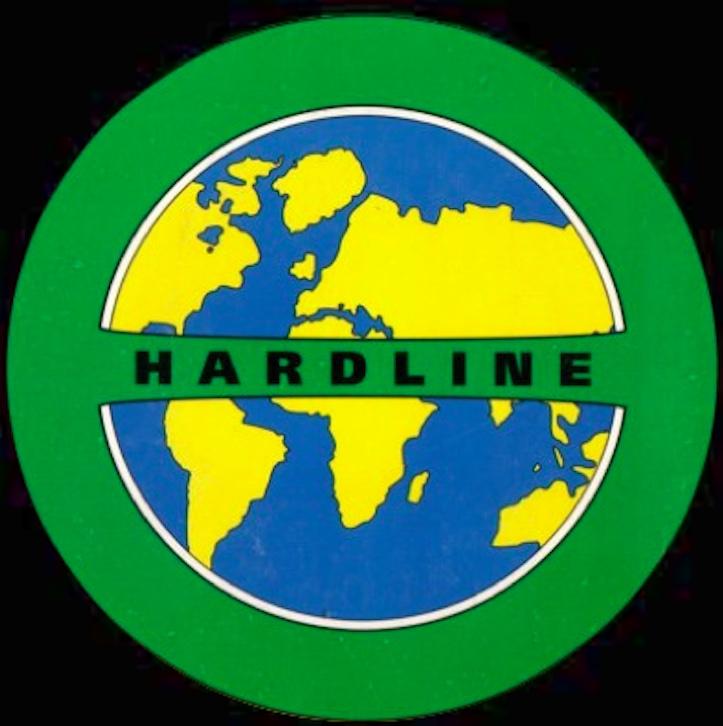
Figure 2: Sean’s Hardline logo, 1990.
In 2005, the vegan straight edge band Gather used another variant of the Earth ecology symbol for their Total Liberation 7” see (Figure 3).
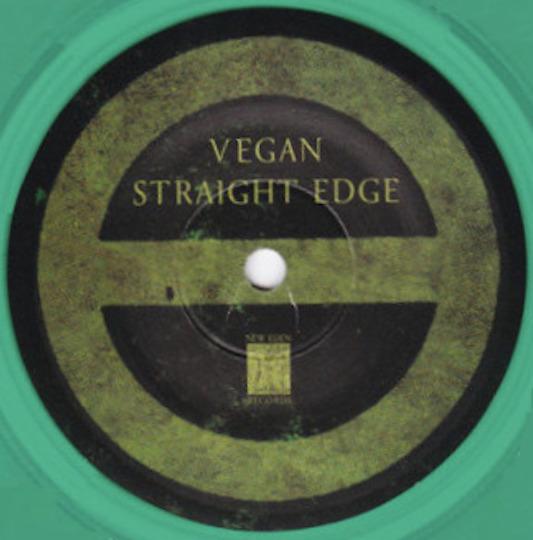
Figure 3: Gather’s Total Liberation 7”, 2005 (by Empty Design Coalition/Adam Hunt).
As Hardline helped spawn the vegan straight edge movement, this seemed relevant.
Demonstrating that graphic evolution (or the similar evolution of crossed guns in Sean’s other Hardline logo) seems like run-of-the-mill research – hardly something to take to court (for the crossed-gun images in the original article, see Fiscella (2026), p. 26). Nor do I see why documenting punk history with evidence should seem controversial. In fact, I had previously published an article documenting the (incomplete) history of “punk Islam” in an academic journal (including photos and artwork images) without any problems (Fiscella 2012). Nor should one expect any problems. The 1940 Statement of Principles on Academic Freedom and Tenure by the American Association of University Professors (AAUP) stated, “Teachers are entitled to full freedom in research and in the publication of the results” and courts have relied on the Statement in their rulings (Euben 2002).
Yet, copyright law, by design or accident, has negatively impacted academia as well as creative work (Davis 2011; Vaidhyanathan 2001). University presses and libraries have tended to take a skittish approach precisely because of potential litigation that could cost them huge sums of money. Academics and educational institutions need to revisit this position because pre-emptive surrender erodes the very foundation of research and education. In the U.S., academia has a supportive legal doctrine that carries a lot of weight: Fair use. According to Wherry, “Fair use provides the privilege of using an author’s work without permission or payment” (2002, p. 18). It helps a lot but it neither eradicates copyright law nor erases exaggerated fears in relation to those laws: “Failure to employ fair use affirmatively and consistently impairs the accomplishment of the academic and research libraries’ mission” and, in some cases, has led to “providing disabled students with lower levels of access than their peers for fear of violating copyright” (Adler et al. 2010, p. 1).
In 2001, the Recording Industry Association of America (RIAA) won $26 million against Napster for distributing music online via peer-to-peer file sharing at no cost to users. Napster claimed fair use and lost the court case.
Courts look at four key prongs to assess fair use: 1. Does the new usage seem transformative? (e.g., transforming from a commercial purposes to a non-profit purpose or transforming something from an activist or entertainment context into an educational context for purposes of analysis; profit-driven blogs can not claim fair use for posting copyrighted material); 2. Does it conform to intended purpose of copyright protection? (e.g., does it avoid things like false claims of creation or ownership?); 3. Does the copyrighted piece only amount to a relatively small portion of the whole reproduced context? (e.g., the distinction between taking someone else’s poster design and using it for one’s own purposes vs. reprinting a thumbnail of that poster design alongside many others); 4. Does the new reproduction avoid harming the potential market for or value of the copyrighted work? (e.g., if a professor made copies of an educational worksheet from a single purchased academic book and distributed them to students for repeated courses as part of the curriculum then that would not qualify because it could reduce book sales).
If a reproduction could answer “yes” to all of those questions, it would constitute fair use. In the case of Napster, the court answered “no” to all four questions: Napster changed neither the work nor its intended context of usage (non-transformative); violated the intended purpose of copyright protection; distributed music pieces as full reproductions (not small clips as part of wider selections); and Napster’s file-sharing reduced potential sales and value of the copyrighted work. Regardless of one’s opinion of the court’s ruling, it clearly does not translate into the academic reproduction of material for educational purposes.
Yet rare instances of claims of fair use failing in court, such as Napster, have had the (perhaps desired) effect of “killing a chicken to scare the monkeys.” It makes it easy (and seemingly safer) for skittish institutions to forget cases where fair use has won. But they do exist in examples such as Bill Graham Archives v. Dorling Kindersley Ltd., 448 F.3d 605 (2d Cir. 2006) in which the federal court ruled it permissible for a publisher to have reprinted Grateful Dead concert posters in a book (thumbnail size and part of a timeline helped win the case). In another fair use victory the publisher of Famous Monster Movie Art of Basil Gogos (2005) won against the publisher of monster magazines from the 1950s, 60s, and 70s who sued them. The district court in Warren Publishing Co. v. Spurlock d/b/a Vanguard Productions, 645 F.Supp.2d 402, (E.D. Pa., 2009) ruled that the use qualified as transformative and biographical, only one page of many, and, as the copyrighted magazines had gone out of print, the reproduction constituted no economic loss.
As for defamation according to U.S. law, one need only look to New York Times Co. v. Sullivan (1964) to see how false claims (by the New York Times) that defamed and harmed the reputation of public officials still fell under First Amendment protection because “public issues should be uninhibited, robust, and wide-open, and […] may well include vehement, caustic, and sometimes unpleasantly sharp attacks…” (Hudson 2026). This would give a wide berth for supposedly defamatory statements but one should recall that to even begin to qualify as defamation, one must demonstrate that it stemmed from false statements and, as far as I know, my article did not contain any false statements about Sean or Hardline – only facts and opinions that he (apparently) did not like.
On a separate but related note, we could even revisit the question of copyrights altogether and ask if they really benefit artistic creators or huge corporations (Stahl 2013). If we take the example of music (easier to assess than reproduced fanzine artwork), a critique of copyrights might focus on big business, as here, where Bryan Jones explained how even ostensibly anticapitalist music labels had to contend with and lend de facto economic support to major corporate labels:
minor record labels still had to operate within the parameters of capitalism which by this time had become a rigged game that still benefited the big five [music industry giants] because the sale of a CD – any CD, even those recorded on minor labels – still put money into the pockets of the big five [because they controlled mass distribution]. Add to that the fact those vampire corporations such as the RIAA and ASCAP – which exist under the guise of nonprofit organizations helping insure that artists are paid royalties whenever their music is played, but really only suck money out of restaurants and bars in order to pay its executives millions of dollars in annual salaries – also worked to exploit the artist, and it becomes quite clear that online piracy is a necessary reaction to the contradictions inherent within the culture of late capitalism. (2010, p. 135)
None of this would surprise anyone familiar with the history of copyright law which traces back to 1556 in England with the Charter of the Stationer’s Company. The Charter gave power to publishers (not for but against authors) and simultaneously functioned as a means of censorship allowing them authority for “seizing, taking, or burning foresaid books or things” when the newly developed printing press threatened the status quo with radical – often Puritan – texts (Patterson 1993, p. 9).
I write this to remind readers of grave flaws embedded in copyright law from its inception to the present day. Yet, the focus of this brief essay addresses a related but different topic: it rests on the simple proposition that U.S. law allows for fair use and therefore scholars dealing with material copyrighted in the U.S. (not that Sean necessarily copyrighted his work) should treat fair use as a reliable legal foundation to support ordinary academic research and publication.
Personally, I do not believe a university press should have required Sean’s permission to use his artwork because: 1. Non-profit educational purpose constitutes fair use (e.g., it transforms original art into a new purpose and context, credits creators, constitutes a small portion of the total work, and does not negatively impact the sales or value of the artist); 2. The punk scene (including Sean and Hardline) thrived, in part, because people appropriated ideas and art from various places (as Ian MacKaye said: don’t ask for permission); 3. Sean didn’t need or seek permission to use Ron Cobb’s idea/work for his project and I don’t see any need to seek permission to use Sean’s work for mine; 4. Sean’s artwork already appears on the Internet, in fanzines, and in published works (e.g., Eeyore 2022; Hughes 2018; Olson 2026); 5. Artwork, like information, deserves dissemination: “Knowledge cannot advance within conditions of intimidation, self-censorship, constraint, and penalties” (Nocella et al. 2010, p. 25).
The University of Toronto Press, however, insisted on receiving permission from Sean and contacted him directly. They then replied to me that, after reaching him, he not only refused to grant permission to use his artwork for the article but he claimed that the article “contains a number of defamatory statements” about him and others involved in Hardline “that could be the subject of legal action.” They subsequently refused to publish the article. (You can read the article yourself and determine if anything in it seems “defamatory”). I relied on historical sources of what Sean said himself – which, understandably, he might regret – and I quoted what other people had said about the Hardline scene (typically regarded as historical documentation of people’s views).
How and why would a university press submit to a baseless claim and the threat of litigation by some disgruntled subject of historical study?
I found this fascinating. If I had written an article analyzing the artwork of the Islamic State in the Middle East or a small anti-homosexual evangelical sect in Uganda, I cannot fathom that a university press would require permission to publish and analyze said artwork nor would they fear legal reprisals if I had interviewed people who spoke critically of said group. Yet, for whatever reason (because the people in question have their base in the United States?), they shut it down.
I feel more disappointed with University of Toronto Press than I do with Sean. Even though he vocally opposed censorship when the prominent punk fanzine MaximumRockNRoll applied it to Hardline in 1992, censoring this article through threat of litigation seems in line with his persona (see Eeyore 2022, p. 204; alas, double standards in relation to “free speech” seem increasingly normalized, see Lukianoff 2025). To that, I can only say, Sean: please sue me for posting the article online. I would love for this case to go to court because, not only would the court likely rule in my favor, it would hopefully stand as a clear marker to universities and other academic institutions that they should resist attempts to intimidate them with baseless litigation threats and stick to doing their work: education, research, documentation, and intellectual inquiry. I feel no joy in going to court and it would no doubt cause more than a little grief but I strongly feel that the result would make it feel worth it.
But the university has a public obligation to prioritize research and education over petty attempts at bullying by people who don’t like certain research. Yet, for now, despite me having sent University of Toronto Press ample academic and legal information defending the publication of the article, they retracted the article and shut down academic inquiry. Subsequently, they blocked an attempt to document and clarify the historical record related to a topic that affects all of us: total liberation from the oppression of animals, people, and ecology. Over a period of 7 years, I put in hundreds of unpaid hours of work on this article because I believe these things matter. I believe setting the historical record straight matters. I believe education matters.
Censoring scholarship due to threats of litigation seems to me like a gross infringement on – even abandonment of – the integrity and development of academic discourse, documentation, and analysis.
If you work at a journal and want to publish this text or the original article, then go right ahead. In the meantime, I wanted to raise this topic of censorship now to call on others to join the struggle to resist the obsession with copyrights and permissions for academic publishing.[1]
In cases like this, it seems obvious: a sane society and a sober academic culture would reject copyright restrictions in favor of inquiry, fair use, and the DIY spirit that helped punk zine culture arise. That didn’t happen in this case. Hence, I made a slightly updated version of the article (e.g., Figure 1, footnote 10). And I posted it online for any person to read or any journal to publish – without asking anyone for permission.
References and resources
Aufderheide, Patricia. 2011. “Myths About Fair Use.” Inside Higher Ed. 1 August. https://www.insidehighered.com/views/2011/08/02/myths-about-fair-use
Adler, Prudence, Brandon Butler, Patricia Aufderheide, and Peter Jaszi. 2010. “Fair Use Challenges in Academic and Research Libraries.” Association of Research Libraries.
Benson, Sara. 2018. “Nina Paley No Longer Sings the Copyright Blues.” Copyright Chat. University of Illinois. http://www.library.illinois.edu/scp/podcast/nina-paley-no-longer-sings-the-copyright-blues
Copyright and Fair Use: Common Scenarios. 2022. https://csulb.libguides.com/copyrightforfaculty/scenarios
Davis, Bowdoin. 2011. “Copyright’s Immoral Rights?” Visual Resources 27(4): 361–369.
Eeyore, Phoenix X. 2022. Total Revolution? An Outsider History of Hardline. Warcry Communications.
Euben, Donna R. 2002. “Academic Freedom of Individual Professors and Higher Education Institutions: The Current Legal Landscape.” AAUP. https://www.aaup.org/academic-freedom-professors-and-institutions
Fiscella, Anthony T. 2012. “From Muslim Punks to Taqwacore: An Incomplete History of Punk Islam.” Contemporary Islam 6: 255–81.
Fiscella, Anthony T. 2026. “From MOVE to Hardline: A Punk Perspective on the History of Total Liberation.” Archive.
https://dn721901.ca.archive.org/0/items/history-of-total-liberation/History-of-Total-Liberation.pdf
Hudson, David L. 2026. “Defamation and the First Amendment.” Foundation for Individual Rights and Expression. http://www.fire.org/research-learn/defamation-and-first-amendment
Hughes, Brian. 2018. “Reich vs. Reich: Sex Economy and the Hardline Subculture.” Parasol 2: 76–117.
International Communication Association (ICA). 2010. Code of Best Practices in Fair Use for Scholarly Research in Communication. ICA. http://www.icahdq.org/fairuse
Jones, Bryan L. 2010. “The Punks of Pirate Bay: An Anarcho-Analysis of File-Sharing Websites.” In Jeff Shantz (Ed.), A Creative Passion: Anarchism and Culture, pp. 127–139. Cambridge Scholars Publishing.
Kuhn, Gabriel (Ed.). 2010. Sober Living for the Revolution: Hardcore Punk, Straight Edge, and Radical Politics. Oakland: PM Press.
Lukianoff, Greg. 2025. “The Censorship You Practice Today Will Be Used Against You Tomorrow.” New York Times. 23 September. https://www.nytimes.com/2025/09/23/opinion/consequence-culture-kimmel-kirk.html
Nocella, Anthony J., Steve Best, and Peter McLaren (Eds.). 2010. Academic Repression: Reflections from the Academic Industrial Complex. Oakland: AK Press.
Olson, Benjamin Hedge. 2026. “Our Violence is a Reaction: Hardline, Anarcho-Primitivism, and the Limitations of Radical Hardcore Punk.” In Jim Donaghey, Will Boisseau, and Caroline Kaltefleiter (Eds.), Punk Anarchy In Action!, pp. 55-83. Karlovac: Active Distribution.
Patterson, L. Ray. 1993. “Copyright and ‘The Exclusive Right’ of Authors.” Journal of Intellectual Property Law 1(1): 1–48.
Question Copyright. 2023. https://web.archive.org/20251101014509/https://questioncopyright.org
Stahl, Matt. 2013. Unfree Masters: Recording Artists and the Politics of Work. Durham: Duke University Press.
U.S. Copyright Office Fair Use Index: http://www.copyright.gov/fair-use
Vaidhyanathan, Siva. 2001. Copyrights and Copywrongs: the Rise of Intellectual Property and How it Threatens Creativity. New York: New York University Press.
Wherry, Timothy Lee. 2002. “Fair Use,” in The Librarian’s Guide to Intellectual Property in the Digital Age: Copyrights, Patents, and Trademarks, pp. 17–24. Chicago: The American Library Association.
[1] Take the “y” out of “copyrights” and it reads “cop rights”: the rights of cops (formal and informal) to steer public discourse. If we instead change the “y” to a “Why?”, we can ask: “Why, when, how, and if (ever) do copyrights seem justified?” If we did that, then we would have the framing necessary to defend a non-profit right to copy—not a reich to prevent it.